


WorldBox - Sandbox God Sim
4.639.21K Reviews
App Specs
- Version
- 0.51.4
- Updated On
- License
- Free
- Downloads
- 50,000,000+
- Developer
- Mako Mako
- Categories
- Simulation
- Platform
- Android, iOS
Screenshots
 Analysis by AppCompare
I usually know within a few minutes whether a sandbox game gives me room to play my own way or keeps nudging me toward a fixed objective. WorldBox - Sandbox God Sim leans strongly toward freedom: I shape a world, introduce life, and then decide whether to watch events unfold or interfere. That makes it an easy game to dip into, though it also means the fun depends on what I choose to make of a session.
Small goals make a big sandbox easier to enter
With a world that can be altered so freely, I find it helps to give myself one modest aim before I start. I might build a landscape with a few different habitats, add creatures, and see what happens, or set up neighboring settlements and watch their relationship develop. These self-chosen goals create a useful starting point without turning the game into a checklist.
The satisfying part is that the setup itself can be play. I can make a calm little ecosystem, then introduce a disruptive force and observe the consequences. For a short break, that is more appealing than a simulation that requires a long chain of instructions before anything interesting happens. If I have more time, I can keep adjusting the world and follow the chain reaction for longer.
Progress is visible in what the world becomes
This is not the kind of game where I rely on a conventional level ladder to tell me that I am moving forward. I read progress through the world: a quiet patch of land can become a place where creatures gather, villages appear, kingdoms develop, and conflict changes the balance. The pleasure is in noticing how the scene has changed since I last looked, rather than reaching a single finish line.
That also makes observation an active choice. I can leave a world alone for a while, check back, and decide whether its natural development is interesting enough to continue or whether it needs a new twist. One practical habit is to change one major thing at a time. If I introduce several disruptions together, it becomes harder to tell which one caused the most noticeable shift.
A gentle learning curve, with a trade-off
Because there is no need to approach every session as a test, I can experiment without worrying about getting the perfect result. I can build first, interfere later, and learn by seeing what changes. The downside is that players who want clear objectives, steadily increasing difficulty, or a strong guided campaign may find this open structure too loose. The game gives me tools for making events happen, but much of the challenge comes from deciding what would be interesting to try.
I also think the freedom makes patience part of the experience. A busy world can be fun to watch, but its most interesting developments may take time to emerge. When I want constant action, I can create a more dramatic situation; when I want a calmer session, I can let the ecosystem take the lead. Neither approach is automatically more rewarding, so it helps to pick the pace I want rather than expect the game to set it for me.
Worth Reading Before You Choose

Flipboard Shows What News Apps Must Do Beyond the Feed

Switching to Android Auto Means Rethinking Your Driving Routine

Google Calendar Makes a Crowded Week Easier to Manage

Ludo King Makes the Most of the Minutes Between Plans

Baby Panda World Brings Quick Play to Modern Phones, but Its Game Library Feels Busy

ESPN’s Live Game View Makes Following Close Games Easier
What keeps me coming back—and what does not
There is no single prescribed route that I have to repeat, which gives me a reason to return with a fresh experiment. I might try to create a balanced world, then make a small change and see whether it stays balanced. That said, open-ended play can lose its pull when I have run out of ideas. If I need a clear reward for every task or a definite ending, this is less likely to hold my attention than a more structured simulation.
It is also worth thinking about how much control I actually want. I can spend a session shaping every corner, or I can step back and treat the world as a little ongoing experiment. The second approach is more relaxing, but it can also mean that events unfold in ways I did not plan. I enjoy that unpredictability; someone who prefers precise control over every character and outcome may not.
Creating Your Own World
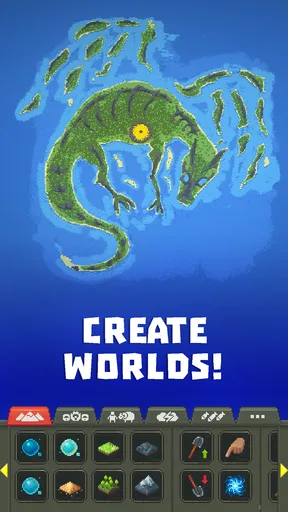
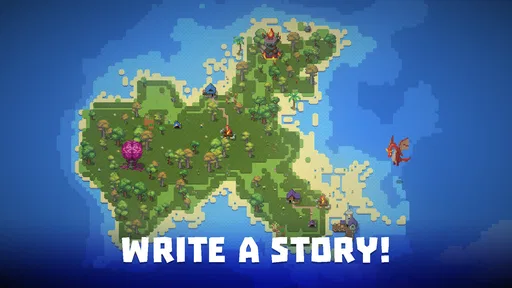
Once you fire up WorldBox, you're immediately thrust into the role of an omnipotent being with a blank canvas sprawling before you. The intuitive interface lets you craft lands, oceans, and mountains with ease. Want a desert next to a snowy peak? No problem! The game gives you free rein to design landscapes as wild or realistic as you like.
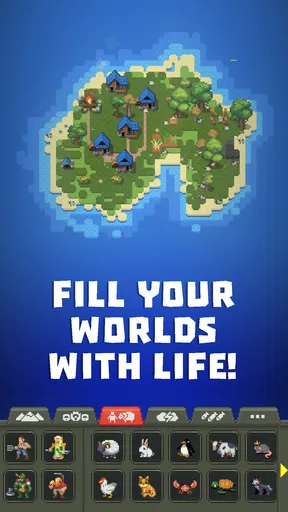
What I find most satisfying is the ability to populate these lands with various creatures. You can drop in creatures like sheep, wolves, or even dragons. It's like having your personal petting zoo that occasionally breathes fire. Watching these animals interact, form packs, or hunt each other is both charming and a little chaotic, which, let’s face it, is part of the fun.
Unleashing Your Powers
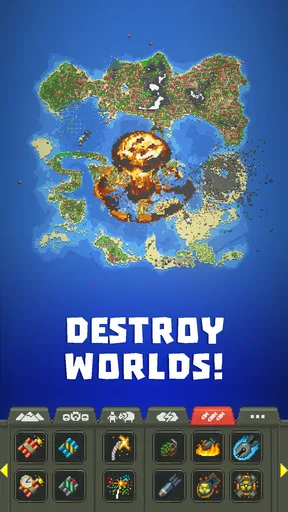
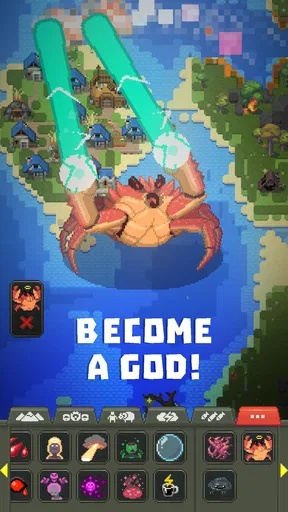
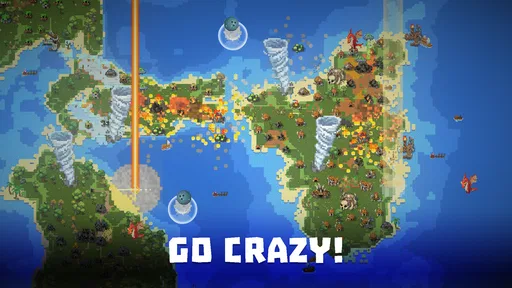
The real thrill of WorldBox is experimenting with the powers at your disposal. Feel like causing a little mayhem? Unleash a tornado or a volcanic eruption and watch the destruction unfold. There’s something oddly satisfying about seeing your creation undergo natural disasters, only to rebuild and thrive again.
Beyond the basic elements, you have access to more fantastical abilities. Summoning demons or gifting life to inanimate objects brings a touch of the surreal to the game. It’s a sandbox in every sense of the word, letting you explore scenarios that range from the mundane to the mythical.
A Living, Breathing Ecosystem
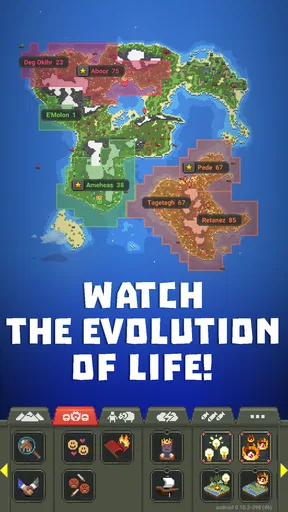
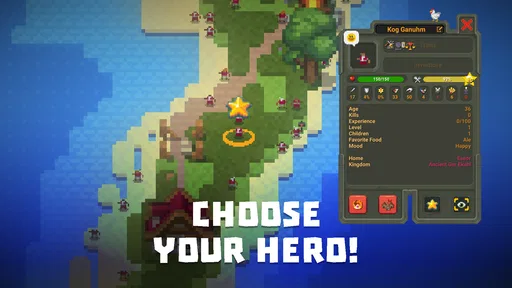
What’s really impressive about WorldBox is the depth of its ecosystem. Each creature or entity has a life cycle, and they interact in unexpected ways. Villages can form, kingdoms can rise, and wars can break out without you lifting a finger. It’s a living world that evolves based on the rules you set—or choose to ignore.
Observing these dynamics can be endlessly entertaining. I found myself lost in watching tiny pixelated villagers go about their daily lives, building homes, and occasionally getting into skirmishes with neighboring tribes. It’s like watching a tiny, pixelated soap opera unfold on your screen.
Graphics and Sound
While the graphics are simple, they’re charmingly pixelated, bringing a retro vibe that adds to the game’s appeal. The art style is colorful, and each element is distinct enough to make your creations easily recognizable. It’s not about hyper-realistic imagery but rather a throwback to simpler times, and it works perfectly for this type of game.
The sound design complements the visuals well. The background music is soothing, perfect for a game where you’re encouraged to experiment and relax. Sound effects are minimal but effective, adding just the right touch of realism to your godly endeavors.
Is It Worth Your Time?
In a word—absolutely. WorldBox - Sandbox God Sim is a delightful escape into a world of creativity and chaos. It’s perfect for those moments when you want to unwind and let your imagination run wild. Whether you’re a fan of simulation games or just looking for something unique, this app offers a refreshing take on the genre.
Ultimately, the game’s strength lies in its flexibility. You can spend hours meticulously crafting and caring for your world, or you can pop in for a quick session of destruction and spectacle. Either way, you’re guaranteed a good time.
Ready to try your hand at world-building? You can download WorldBox - Sandbox God Sim from the app store and start your adventure today. Just remember—you’re the god, so play nice... or not!
Choosing it over other simulation games
WorldBox is a simulation game from Mako Mako, and its appeal is less about managing a detailed schedule or completing a campaign than about creating conditions and watching the consequences. Compared with management sims that ask me to optimize resources and meet explicit targets, this is much more of a toy-like world laboratory. Compared with a pure building game, it gives the inhabitants room to act and lets conflict emerge, so I am not responsible for designing every moment myself.
That distinction helps me decide when to open it. If I want to plan a settlement layout carefully and keep control of every moving part, a dedicated city builder is a better fit. If I want a world that can surprise me after I have set the scene, this has the stronger pull. I treat it as a place to test ideas, not as a substitute for a strategy game with a clearly defined win condition.
A practical way to get more from a session
For a quick play session, I would avoid trying to make a huge, complicated world immediately. I start with a compact area and a simple question: will these creatures coexist, or will this landscape push them into competition? Once I have a baseline, I introduce one change, such as a disaster or a new creature, and watch what follows. This makes cause and effect easier to notice and gives even a short visit a natural shape.
For a longer session, I might build contrasting regions and see how their populations develop. The useful trade-off is that a carefully prepared setup takes attention, while a spontaneous one gets to the interesting part faster but can become harder to interpret. I also try not to intervene every time something goes wrong. Leaving a setback in place can make recovery more satisfying than immediately correcting the world back to my preferred version.
Who will enjoy the open-ended pace
I would recommend it to people who like inventing their own experiments, enjoy watching small systems interact, or want a creative game that does not demand a fixed routine. It can suit a relaxed evening at home as well as a few minutes of tinkering between other tasks: I can make one change, watch for a while, and stop when the world has given me a story worth remembering.
It is less suitable if I need frequent instructions, a clear sequence of unlocks, or a reliably escalating challenge. The game’s open structure leaves much of the motivation to me, and an empty world can feel directionless until I decide what I want to test. Players who prefer direct control over each character may also find the hands-off observation less engaging than a traditional management game.
What to expect before installing
The game is free to download and is rated for Everyone. Its average rating is 4.6 from around 832,000 ratings, with about 39,000 written reviews and over 50 million installs. It was released on October 10, 2018, and version 0.51.4 is listed for Android 6.0 or later. Optional in-app purchases range from $1.99 to $7.99 per item, so I would check the purchase details in the store before spending; the free entry point makes it easy to see whether this style of sandbox suits me first.
One question worth settling before a longer session is whether I want to create or observe. If I want to create, I spend time shaping land and placing life; if I want to observe, I make a simpler setup and resist the urge to keep changing it. Another is whether I enjoy unscripted outcomes. Kingdoms can grow and fight without my intervention, but that does not mean every world will tell a neat story on cue. I find the game most rewarding when I treat unexpected turns as part of the experiment rather than as a failure to follow a plan.
My progression verdict
The game’s goals, progress signals, and pacing work best when I supply a small purpose and let the world complicate it. Its strongest progression is not a promise of a particular unlock path; it is the visible transformation from a blank landscape into a place with inhabitants, settlements, and a history of its own. That can keep me curious across many visits, but it will not replace structured objectives for players who want the game to set their next task.
For me, that is a fair and appealing trade. I get an unusually flexible simulation where I can move between gentle world-building and sudden chaos, and I do not have to treat every session as a test of skill. I would recommend giving it a try if the idea of shaping a tiny world and then watching it surprise you sounds enjoyable. If you need a guided campaign or tightly controlled management, I would choose a more goal-driven alternative instead.
Pros
- Limitless creativity with sandbox mode.
- Intuitive controls for easy gameplay.
- Regular updates add new features.
- No forced ads
- enhancing experience.
- Offline play available anytime.
Cons
- Limited guidance for new players.
- Graphics might seem basic to some.
- In-app purchases can be pricey.
- Occasional performance lags on older devices.
- No multiplayer or online interaction.
FAQs for WorldBox - Sandbox God Sim
What is the main objective of WorldBox - Sandbox God Sim?
WorldBox - Sandbox God Sim is a creative simulation game where you play as a deity with the power to create and destroy. Your objective is to shape the world by crafting landscapes, populating them with diverse creatures, and experimenting with various elements. There’s no fixed goal, allowing for endless creative possibilities.
Is WorldBox - Sandbox God Sim free to play?
WorldBox offers a free version with basic features, but there is also a premium version available. The premium version unlocks additional elements and tools, enhancing the overall gameplay experience. It’s a one-time purchase, allowing you to expand your creative potential without ongoing costs.
What platforms is WorldBox - Sandbox God Sim available on?
WorldBox - Sandbox God Sim is available on both Android and iOS platforms, making it accessible to a wide range of mobile users. The game is designed to run smoothly on most modern devices, providing an engaging experience whether you’re on a phone or a tablet.
What kind of updates does WorldBox receive?
The developers of WorldBox frequently release updates that include new features, bug fixes, and enhancements. These updates often introduce new creatures, elements, and world-building tools, ensuring the game remains fresh and exciting. Player feedback is frequently incorporated into these updates, improving the overall experience.
Can you play WorldBox - Sandbox God Sim offline?
Yes, WorldBox - Sandbox God Sim can be played offline, which is perfect for users without a constant internet connection. This feature allows you to enjoy crafting and experimenting with your worlds anytime and anywhere, without being tied to Wi-Fi or data services.


